Showing posts sorted by date for query Grandmommy. Sort by relevance Show all posts

Sunday, May 24, 2026

Garden Tour with My Girls


From our frequent travels to and from Brooklyn, I have become aware of a number of fantastic public gardens along our route. This past winter, our daughter Maggie wished out loud that she and I could explore together several of these gardens in the Philadelphia area. "Yes, let's do it," was my enthusiastic response. We made plans to visit eight extraordinary gardens over four days. When Mary caught wind of our plans, she wished she could join us for part of it! "Yes, please do!"


The trip took some planning: We had to find dates that worked for everyone while the gardens were in peak bloom, and the girls had to enlist spouses and grandparents to cover time away from the children: Hazel, Norbert, and Roscoe.

We pulled it off! Last week Maggie and I flew to Philadelphia, rented a car, and began our tour of the first four gardens. On day three, Mary drove down from Brooklyn and joined us for three more gardens and a sleepover. As spectacular as the gardens were, spending time with my girls was the real gift.

For my readers who want to know more about the gardens we visited, here are the highlights from each. (Note: we were particularly interested in how native plants were used in each of the eight gardens.)

Mt. Cuba Center, Hockessin, Delaware

Mt. Cuba Center, with its 68 acres of gardens and trails, is a leading native plant research organization. Walking its paths, we moved from a formal lilac allée through meadows, woodland wildflower gardens, and a series of interconnected ponds, eventually arriving at the trial gardens, where Mt. Cuba's researchers have spent decades evaluating native genera — coreopsis, heuchera, baptisia, trillium, monarda, hydrangeas, and goldenrod — for both ecological value and garden performance. In fact, based on their trials, I have recently purchased two Ruby Slipper Oak Leaf Hydrangeas. 


My takeaway: Inside the historic home on the property was a display of flowers in vases, each labeled with its botanical name — the kind I always struggle to remember or pronounce. The display changes weekly to highlight whatever is in bloom. I could do that too! 

Winterthur Museum, Garden & Library, Winterthur, Delaware

Next up was Winterthur, home of Henry Francis du Pont — a collector of American antiques, decorative arts, and plants. He transformed the family estate into a 175-room mansion now celebrated as the premier museum of American decorative arts. But the gardens, all 60 naturalistic acres of them, were what we came for.

The Azalea Woods, the Quarry Garden, the Sundial Garden, the conifer arboretum — each unfolded as if it had always belonged there, following the contours of the land. I especially loved the three-acre children's area called Enchanted Woods, which looked as though fairies had constructed it rather than landscape architects.

My takeaway: The dead hedges I've been building around Farm Dover — especially the Dragon's Tail and the Triangle within a Triangle — could hopefully take on the fairy-tale-esque feel of Winterthur's Enchanted Woods. Each, I'm hoping, will look like the fairies of Farm Dover made them.

Longwood Gardens, Kennett Square, Pennsylvania

I had visited Longwood Gardens some years ago and remembered only its formality: the fountains, the topiaries. Either it has changed, or I was unaware of all the areas devoted to native plants — the Meadow Garden, the Forest District, and the hillside gardens around the Chimes Tower. We found inspiration in the Idea Garden, which features interconnected spaces that blend formal design elements with agrarian styles. We were enthralled by the Conservatory, with its 4.5 acres under glass — a year-round spectacle of orchids, tropical plants, and seasonal flowers that has nothing to do with native plants but everything to do with horticultural wonder. Our visit ended with a peaceful stroll through the Bonsai Courtyard.


My takeaway: The Idea Garden featured a kitchen garden planted on the diagonal rather than in straight rows, with handcrafted structures for vertical growing. I could harvest willow and hazel branches from Farm Dover and use them to make A-frame trellises for peas, beans, and cucumbers.

Stoneleigh: A Natural Garden, Villanova, Pennsylvania

On Saturday morning we met Mary at Stoneleigh, a 42-acre natives-only garden woven into a historic formal landscape. I was especially captivated by the two dozen varieties of native vines climbing a magnificent century-old stone pergola. Mixed hedges of white pine, arborvitae, and native shrubs have replaced the clipped exotics of an earlier era. A former swimming pool has been transformed into a bog garden featuring remarkable carnivorous native pitcher plants.


My takeaway: Add a Crossvine (Bignonia capreolata) and an American Wisteria (Wisteria frutescens) to our board fences.

PHS Meadowbrook Farm, Abington Township, Pennsylvania

Next up was PHS Meadowbrook Farm, a 25-acre estate garden just 13 miles north of Philadelphia. We wandered slowly through its 15 garden rooms surrounding an historic farmhouse, admiring the collections of potted plants, topiaries, archways, and vine-laden metal columns.


My takeaway: After seeing the xeric garden, I want to try planting the corners of our gravel parking area — perhaps with Grandmommy's sedums, or maybe some lavenders.

Morris Arboretum & Gardens, Chestnut Hill, Philadelphia

What a wonderful surprise this turned out to be — a 92-acre destination for native plant and tree lovers, with exceptional collections of native azaleas, magnolias, and maples. Pennsylvania's official state arboretum features enormous tulip poplars, pines, and pawpaws, and the Out on a Limb elevated walkway let us experience the forest from within the canopy. The garden also has a historic Fernery — a charming freestanding glasshouse with a sunken design that houses over 200 species of ferns.


My takeaway: If our trees — most planted in the last 15 years — grow as big and tall as the ones here, Farm Dover will become a truly enchanted place, or, it will look like the overgrown forest in Sleeping Beauty! I only wish I could be here in 50 years to see it.

Chanticleer, Wayne, Pennsylvania

Simply put, Chanticleer is a garden of joy, surprise, and extraordinary horticultural creativity.

What sets it apart is its approach to horticulture as an art. Each of eight talented gardeners is  responsible for designing, planting, and maintaining their own area, and the results — which change meaningfully from year to year — range from the serene Bell's Woodland, a native plant sanctuary, and the contemplative Pond Garden, to the dramatic Ruin Garden set among the remains of a family home, and the sculptural Gravel Garden. The historic trees on the 35-acres are magnificent.


My takeaway: Plant densely. Every square inch of the beds was filled with plants of varying color, height, and texture. Many beds were edged with a single plant type — violas, for example — blurring the hard line between bed and lawn.

Jenkins Arboretum & Gardens, Devon, Pennsylvania

On Sunday afternoon Mary headed back to Brooklyn, and Maggie and I decided to visit one last garden. (It's hard to stop when there are so many to see.)

Jenkins is perhaps the most unpretentious garden of our journey, and in some ways the most moving. It has none of the grand estate history of the others. Instead, it is a 48-acre garden founded by H. Lawrence Jenkins — not a wealthy or prominent man — to honor the memory of his wife, an ardent gardener and wildlife enthusiast. The garden focuses on rhododendrons and azaleas, with companion plantings of wildflowers, ferns, native shrubs, and woodland trees. It was a quiet, perfect way to end our garden tour.

My takeaway: After visiting these eight gardens, I’m convinced that native gardens can be even more beautiful than ones filled with exotic plants from around the world. They represent our ecosystem — what our bees, birds, and beetles need. It's the kind of gardening that makes sense to me, and that I want to keep exploring at Farm Dover -- and learning about via future garden trips with Maggie and Mary.

Saturday, January 28, 2023

Leaning into the Light

And so we come to the end of January. This first month of the year seemed long, with days upon days of grayness, anchored at both ends by leaden darkness. 


Granted, the month afforded time for rest and reflection -- for stillness — especially after the holidays full of to-ing and fro-ing. There was time for reading by the fire and for cooking vats of soups and stews. There was time for brewing endless pots of tea and for streaming shows that everyone else had talked about for months. 

But now the calendar page nears turning and I find myself leaning into the light with an open heart. I find hope in the lengthening days. I linger a little longer by the kitchen window watching the sky turn pink as the sun inches its way over the tree line.

I sense time passing, bringing with it an assurance of the ever-so-slow return of life to the woods and meadows. The pussywillows just outside our study window show off their furry catkins; the star magnolia's gray villous buds appear at the ends of their spiny branches; and the hellebores send forth blooms that I can see only when I kneel on the soggy earth to peer up at their drooping heads. Soon the first snowdrops and early daffodils will grace the orchard ground and the tiny buds of  grandmommy's sedums will poke up. 

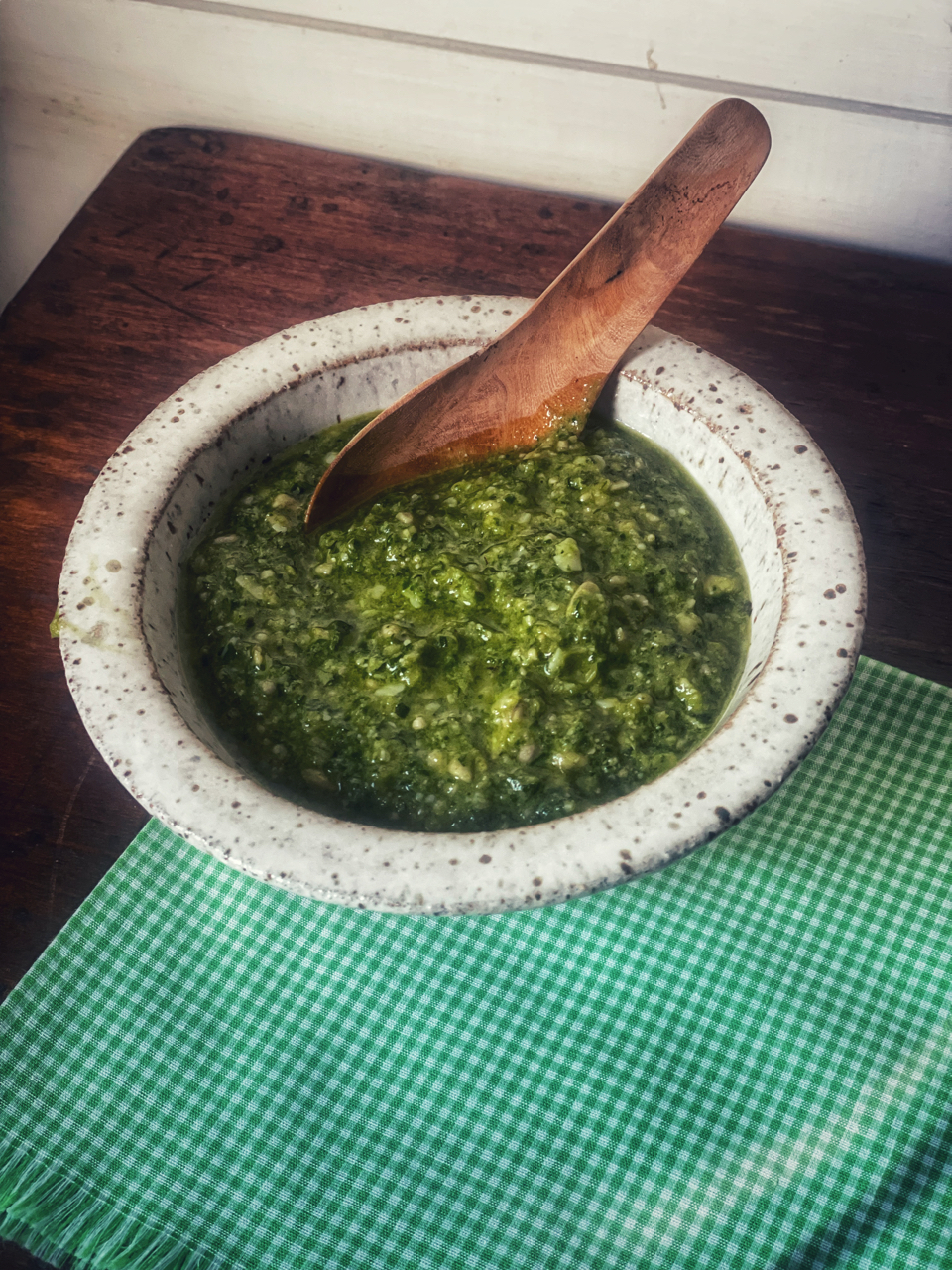
I know that spring must be coming as my days of hunting/gathering have officially commenced for the year. Yesterday, I successfully foraged for clumps of bittercress to turn into a vibrant pesto for our shrimp dinner. 


Before long, tender wild mâche lettuce will blanket large swaths beside our trails and ramps will return to the creek's edge. Early dandelions, chickweed and wild violets will offer up their goodness. 


And before I know it, spring will have returned, as sure as the sun rises.


Friday, January 14, 2022

If Only Quilts Could Talk...

Blessed are the piecemakers. -- anonymous

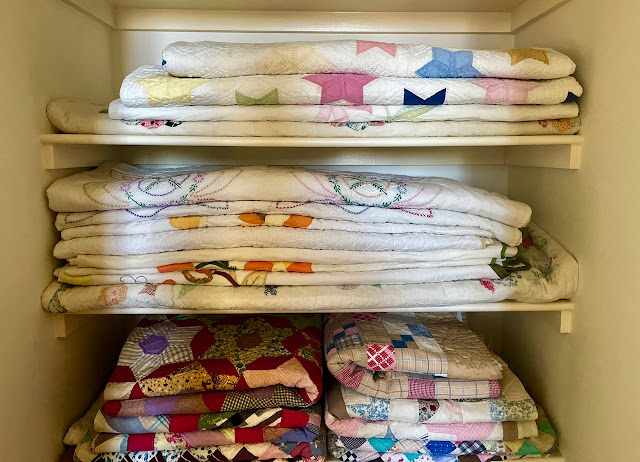
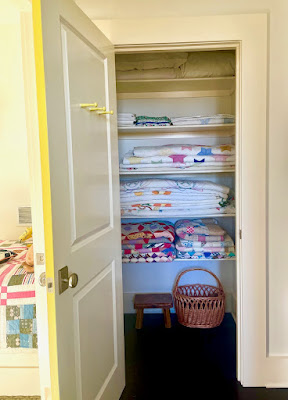
I organized the upstairs linen closet this week which is only remarkable in that our closets are never very organized (or don't stay that way for long.) This job was long overdue. When I would open the door, pillows would tumble out. You get the picture. 

I took everything out and started folding the quilts, tucking them neatly back into the closet.


All of a sudden, I was not alone. I was upstairs with three loving spirits: Ed's grandmother, Mama Fitts (Eliza Bristow Fitts); my paternal grandmother, Ree (Marie Hettiger Carpenter) and my maternal grandmother, Grandmommy (Mary Blacklock Rinehart), for these were the ladies who stitched together all the quilts that our family has found comfort in over the years. Forts have been built; children have been tucked in; fragile items have been wrapped; tables have been set; picnics have been laid; and Christmas trees have been skirted. If only quilts could talk...

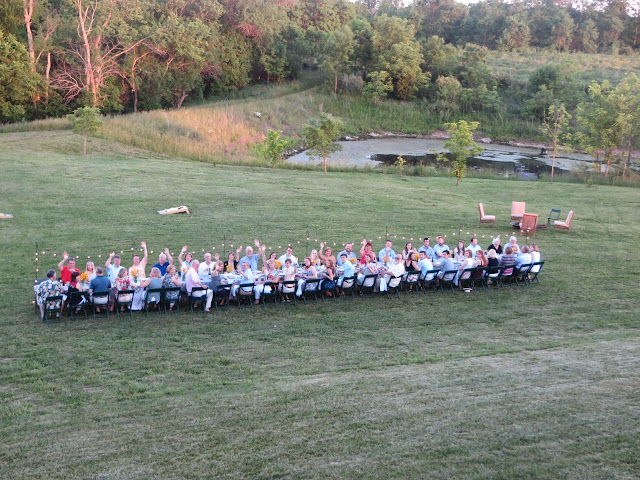
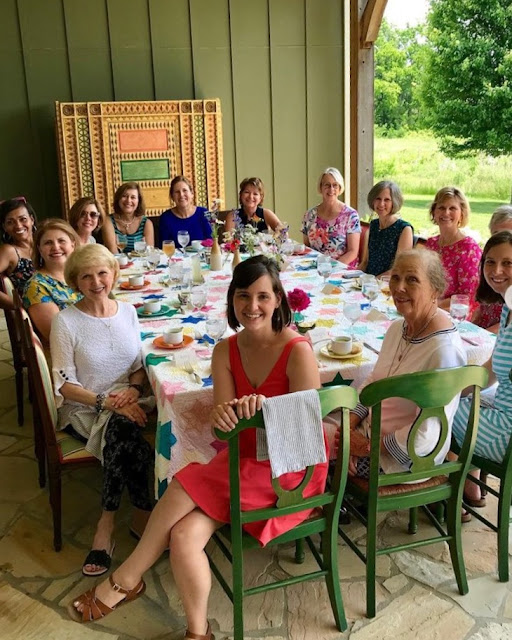
Every one of Mama Fitts' quilts was used as a tablecloth for this engagement party.

Sister Sherry's birthday party, featuring Grandmommy's star quilts

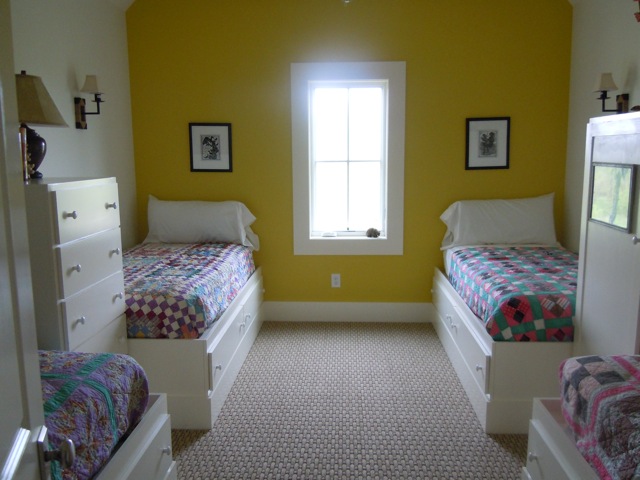
Four little beds: all ready for grandchildren

Each treasured quilt is a work of art. I only wish the artist had stitched her monogram in the bottom corner. But even without initials, I can tell whose hand stitched each quilt.  

Mama Fitts' quilts are all tiny postage-stamp coverlets, patchworked together from outgrown or outworn clothes. Ed can even point to a tiny blue patch made from a shirt he wore as a young child. 

Mama Fitts

Many of Mama Fitts' quilts we inherited from Ed's mom; they are the ones Ed remembers growing up with. They are well loved (i.e. well worn) and in need of some repair. Others came from his Aunt Gladys, who never had children; those quilts are in much better condition. 

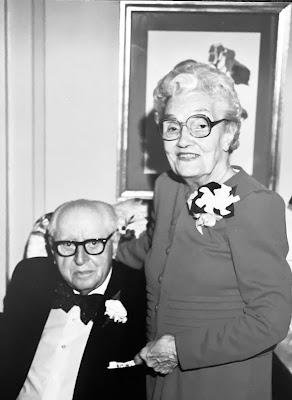
The quilts made by Ree are all appliquéd, most with orange and yellows poppies on a white background, with scolloped edges. She made quilts for each of her nine grandchildren, a gift to each upon their marriage. I remember having pretty intense conversations with her about when I might get my quilt if I chose to never marry. We settled on age 35. 

Ree (with Grandpoppy)

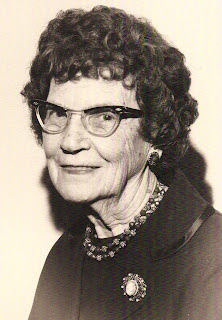
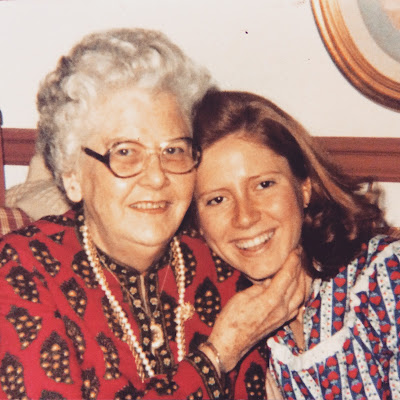
Grandmommy's quilts are geometric and of traditional design: mostly stars and rings. But my favorite is one she made for me when I was born: two lambs appliquéd in the softest cotton and palest of blue, pink and yellow fabrics, now faded nearly to white from 65 years of use. If I look hard enough, I can just make out my name: Debra Lynn Carpenter and my birth weight: seven pounds, eleven ounces, embroidered on the border. 

Grandmommy (with me)

These quilters were born more than a century ago; none of their children or grandchildren showed any interest in the craft of quilting. But I'm encouraged. Daughter Mary has taught herself how to quilt and has made a quilt for her nephew, Norbert. Amy, Sister Sherry's daughter, is an accomplished seamstress and perhaps quilting will be in her future. And Sister Julie's twin daughters, Katie and Molly, are both amazing and accomplished artists that love hand crafting.

Norbert, happily playing on Mary's quilt

So, who knows, perhaps quilts will once again be produced by the women (or men) of our family. I hope so.


On a related note...

Last spring Ed and I traveled to Paducah, KY and while there, spent an afternoon admiring the quilts at the National Quilt Museum. If you are ever in the area, you should go. 


Monday, December 21, 2020

What's making you happy?

Many of the things that made me happy a year ago are now impossible – things such as sharing a memorable meal in a faraway place with some or all of my family. 

Today, my happy moments come in the everyday unfolding of life here at Farm Dover. They are usually triggered by a sensation – something seen, heard, smelled or tasted.  Here are some of the small joys that have revealed themselves in recent days. 


Coffee in bed/early morning light: On these dark December mornings, Ed, who usually gets up before me, makes coffee and brings me a hot mug of it along with my iPad. I wake slowly, often staying snuggled in until I see dawn breaking against a flaming horizon and eventually, the first light on our bedroom wall.

Owl hoots and starling murmurations: A Great Horned Owl has taken up residence at Farm Dover. We saw it for the first time at dusk as Ed and I drove up to the house after my Dad's funeral. He flew up from the driveway and perched on an eave, silhouetted against the darkening sky. I now listen for his evening hoots and find strange comfort in them. 

Most nights – just before dusk – huge groups of European Starlings come together to roost. Before settling in for the night, they will twist, turn, swoop and swirl across the sky in beautiful shape-shifting murmurations. 

Photo by BBC.com

Snail mail: Most afternoons Ed and I walk the half-mile drive out to the mailbox, where I get great pleasure from finding a stack of holiday cards or handwritten letters of condolence. 


Cheesestraws sliding off the baking sheet: This year, granddaughter Hazel is my cheesestraw apprentice, and a worthy one at that. She helps mix the ingredients then tries her very best to turn out the squiggly dough onto the ancient baking sheets, which once belonged to my Grandmommy. The sheets are rimless on two sides allowing the baked and cooled cheesestraws to easily slide off – with a swoosh – into ever-growing mounds.  Hazel and I sample one from every batch.


FaceTime calls: Many mornings of the week we get a call from Hazel wanting to say "hi" or show us what treat she discovered in her Advent calendar box for that day. Such a great way to start the day. The highlights of our Sunday are always calls from Mary, Brian and Saltie from Brooklyn and Jack and Kasia from Berlin. Just seeing their faces and hearing their voices make me happy. 

Saltie, waiting patiently for her turn to FaceTime

Winter fires and tangerines: We keep a wood fire burning most evenings. Ed splits the wood and brings it up from the woodpile out by the garden and then feeds it to the fire all evening long. I love to peel a tangerine and toss the peel into fire which sends the citrus fragrance out into the room. 


Dressing as twins with a two-year old: When Hazel was visiting last week, we dressed as twins. It completely satisfied my happiness quotient. 


Happily wedded couples and healthy newborn babies: As hard as 2020 has been, there have been bright spots that include the marriage of Dan and Allie, and Jeananne and Justin, and the birth of baby boy Tripp to Claire and Donald.  Life does go on and I hope 2021 finds us spending time with the newlyweds and rocking newborn babies. 

Photo by Tara D Photos

So my question for you is: What makes you happy these days? I hope you can find ways to include more small joys into your everyday life. Sending love your way...


Tuesday, March 20, 2018

Turn of the seasons

Today marks the Vernal Equinox – an occasion of perfect celestial alignment – distinguished by a day of light and dark of equal length. The sun rose this morning at 7:43, precisely in the east – and will set 12 hours later, precisely in the west. A few minutes after noon today, the sun crossed the celestial equator, signaling the official turn of the seasons. Winter be banished; Spring be welcomed!

T. S. Eliot claims April as the cruelest month; I beg to differ. I nominate March. For it is this month that has me groggy from hibernation – desperately seeking sunshine and time outside. Instead, I'm greeted with only short snatches of sunshine, followed by long stretches of grey skies, freezing drizzle, cold winds and random snow showers.

Heavy wet snow is expected tonight in Shelby County. It could be worse: in Brooklyn, Mary is bracing for the fourth nor'easter in less than three weeks, and Jack in Berlin is looking to overnight lows in the teens.

I'm itching to be outside all day: planting my spring garden, inspecting our trees for breaks of dormancy, picking early daffodils and greeting the returning birds of Farm Dover. Instead, I find myself pulling on another sweater, wishing that Ed would build a fire, that a Netflix disc will arrive in the day's mail, or that I can crawl under the covers well before 10 p.m.

On my brief ventures out, I do find signs that spring is arriving, albeit slowly. I spot a mama woodcock sitting camouflaged atop her four spotted eggs, the red shoots of my peonies unfurl, daffodils hold off blooming by staying insulated in drifts of snow, and Grandmommy's sedum plants send up tiny succulent rosettes.


_____________

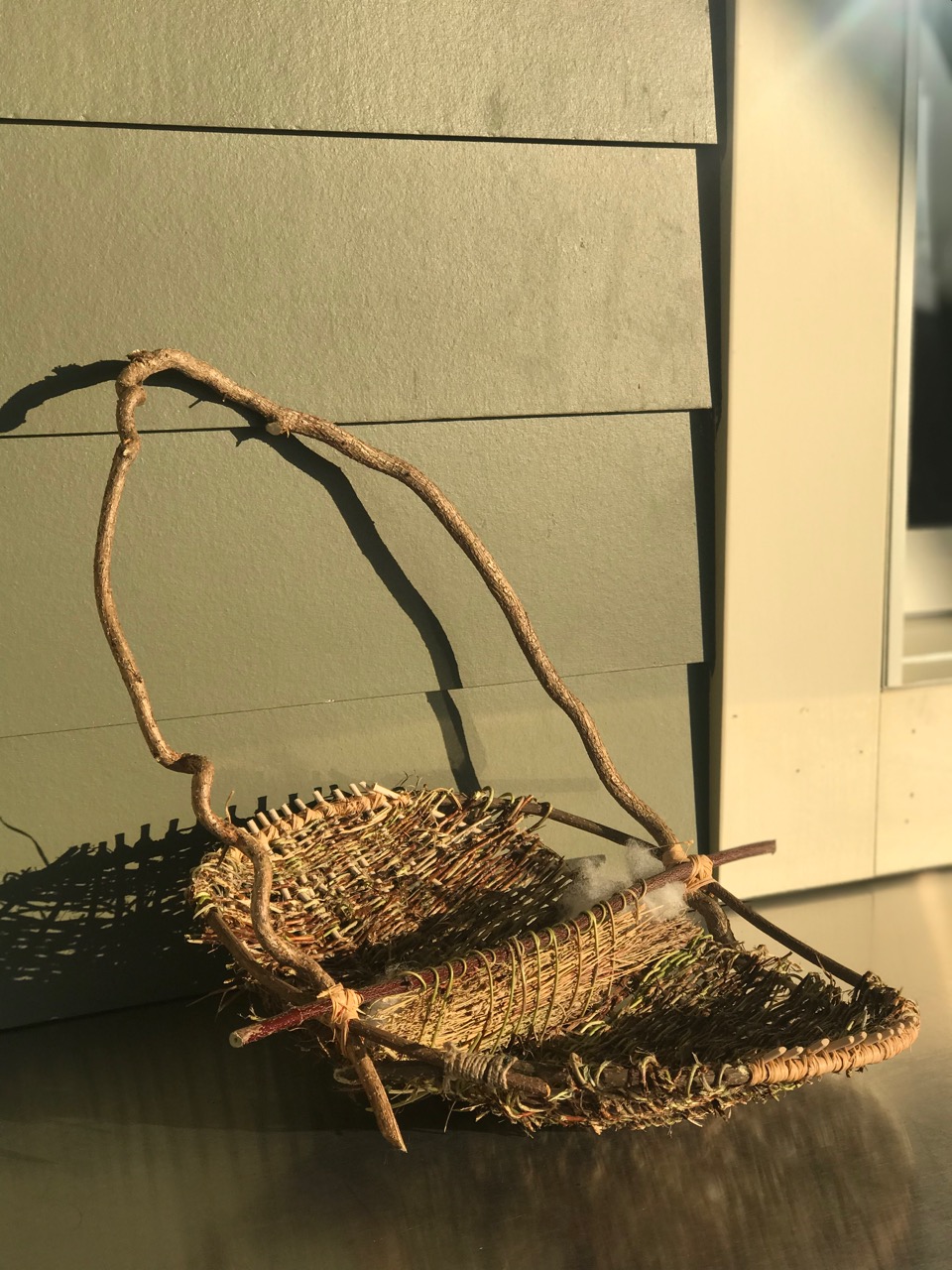
I'm not the only one wishing to hurry up spring's full arrival. My good neighbor, dear friend, and creative genius, Sandy, turned her talents as a weaver into a masterpiece as she waited for a warmup. This past week she wove a beautiful bird-seed basket from grasses, branches and vines that she collected from her next-door-to-us farm.

Once woven, she brought it over as a gift for us to fill with bird seed/suet and hang in the tulip tree in our bee garden. It's made from wisteria, honeysuckle vine, raffia, broom corn, red dogwood stems, and Japanese bittersweet, with bits of Shetland wool tucked into the cracks for birds to use for nests.


It's amazing – a work of fine art – almost too lovely to hang in the elements. But hang it we will, and know that the birds will enjoy it as much as we love admiring it. Thank you, Sandy. Happy Spring. Happy Equinox.

Thursday, June 29, 2017

Happy Bees and Butterflies; Come See What's Blooming

I've been waiting and waiting for the perfect time to show you our bee and butterfly garden. Turns out, there is no perfect time. If I waited until the plants filled in, or all bloomed, or the rain stopped, or the weeds magically disappeared, you would never see it. So, as they say, there is no time like the present...

Here's what it looks like on the 29th day of June, 2017. Enjoy.

Bumblebee seeking nectar from Purple Coneflower

Monarchs on Boneset

Common Milkweed

Rattlesnake Masters
Thimbleweed. Reminds me of Grandmommy's many thimbles.

View down the drive; Slender Mountain Mint in front of Purple Coneflowers;
St. John's Wort just beginning to bloom (yellow) next to bluebird box
Closeup of Devil's Walking Stick. I know how it got its name!
Trumpet vine against Wild Quinine.
On Maggie's wedding day, she wove the Wild Quinine into her hair. 
Bumblebee on Bee Balm. Yes, it is the bees' balm!

The garden is just steps from our front door.

Here's how the garden came to be: Daughter Maggie, who is Farm Dover's head beekeeper, Ed and I had talked about wanting a bee garden for as long as we have had beehives. We wanted to plant a wide variety of native flowers and grasses from which the bees could find a ready source of pollen. Our intent was to design a flower-rich habitat that would have a concentration of blossoms from early spring to late fall, ensuring that our bees would have a constant source of food. As it turns out, what is good for the bees is good for the butterflies – as they also flock to the garden.

We got serious about our garden planning in spring of 2016 and engaged Margaret Shea of Dropseed Native Plant Nursery to help us plan and plant the garden. Ed and I prepared the ground, adding newspaper and mulch to an area that adjoined our front field of native grasses and wildflowers. Our idea was to have it flow seamlessly into the field.

Note to my readers: No matter what size yard you have, it is big enough for a native garden. Even a few plants in a ceramic pot can attract a surprisingly large number of pollinators.

Margaret Shea helped us design the garden.
She provided all the plants from her native nursery in Goshen, KY.
Dropseed Nursery's Elizabeth planted each flower/grass according to the plan.

The tiny native plants needed some time to take hold. And they looked so pathetic, I didn't want you to see it yet.

We watered and weeded the garden last summer and slowly it began to grow, and grow. This summer, there is barely any room to move between the plants. In fact they are so big, I'm already planning to move some of them to other smaller bee gardens that we have started in and around the yard.

Sure enough, the bees and other pollinators love hanging out in the garden. From honey bees to bumblebees to sweat bees, they happily buzz around from flower to flower. I try not to bother them; and they don't seem all that interested in me.

The garden changes almost daily. The Foxglove Beardtongue and Eastern Bluestar have come and gone; the Boneset and Bee Balm are bursting with blossoms. The Ironweed and Joe-Pye Weed are reaching skyward, but not yet blooming.

I love to spend time in the garden – especially early in the morning, or just before the sun slips down – inspecting each blossom, prying out a weed or two, watching the bees and butterflies come and go. I'm working hard on identifying the plants in the garden and learning their scientific names.

Here's what we planted:

St. John's-wort, Hypericum prolificum
Devil's Walking Stick, Aralia spinosa
Little Bluestem, Schizachyrium scoparium 
Prairie Dropseed, Sporobolus heterolepis
Big Bluestem, Andropogon gerardii
Switchgrass, Panicum virgatum
Cut-leaf Prairie Dock, Silphium pinnatifidum
Ironweed, Veronia gigantea
Joe-Pye Weed, Eupatorium fistulosum 
Stiff Goldenrod, Solidago rigida
New England Aster, Aster novae-angliae
Eastern Bluestar, Amsonia tabernaemontana
Foxglove Beardtongue, Penstemon digitalis
Maryland Goldenaster, Chrysopsis mariana
Slender Mountain Mint, Pycnanthemum tenuifolium 
Gray Goldenrod, Solidago nemoralis 
Thimbleweed, Anemone virginica
Rough Goldenrod, Solidago rugosa 
Culver's Root, Veronicastrum virginicum 
Wild Quinine, Parthenium integrifolium 
Smooth Blue Aster, Aster laevis 
False Blue Indigo, Baptisia australis
Rattlesnake Master, Eryngium yuccifolium
Purple Coneflower, Echinacea purpurea
Orange Coneflower, Rudbeckia fulgida
Bee Balm, Monarda fistulosa
Boneset, Eupatorium perfoliatum
Lanceleaf coreopsis, Coreopsis lanceolata
Common Milkweed, Asclepias syriaca
Swamp Milkweed, Aclepias Incarnata
Trumpet Vine, Campsis radicans

Would love to show it to you in person. You know where to find me...